


Quick Facts
• Route: Camino Francés
• Start: Sarria
• Finish: Santiago de Compostela
• Distance: 115 km
• Duration: 5 days
• Month: May 2026
• Difficulty: Moderate
• Luggage Transfer: Yes
In May 2026, three busy ladies decided to walk the final stretch of the Camino de Santiago: 115 kilometers in 5 days.
We weren't entirely sure we could do it, but we were excited to find out. As for why I was doing it, I wasn't completely sure. People walk the Camino for all sorts of reasons. Some come for religious reasons. Others come for health reasons, spiritual growth, or simply because they enjoy walking. Some are celebrating a life event. Others are recovering from one.
I figured I could spend five days walking across northern Spain and perhaps discover my reason somewhere along the way.
Having said that, we are also at the smarter phase of life. We wanted the experience, but we were not interested in suffering unnecessarily. None of us were aspiring athletes, although we considered ourselves reasonably fit.
What we discovered was that almost anyone can walk the Camino, provided they are willing to keep putting one foot in front of the other.
We chose to walk the minimum distance required to receive the Compostela, the official pilgrim certificate. Starting in Sarria, the Camino Francés covers about 115 kilometers to Santiago de Compostela. The route includes rolling hills, forests, and countless small villages. It is not technically difficult, but it is still a lot of walking in five days.
We booked all our accommodation in advance because after walking 20 to 30 kilometers, knowing you have a bed waiting for you is a wonderful feeling. We also hired a luggage transport company so we only had to carry a small daypack.
Every morning by 8:00, we left our bags outside the hotel door. Then, like magic, they would reappear at our next accommodation before we arrived. I never actually saw the luggage company at work. As far as I am concerned, tiny Camino elves may have been involved.
What's the Story with the Pilgrim Passport?
One of the symbols of the Camino is the pilgrim passport, known as the Credencial. For many people, it becomes a favorite souvenir and a reminder of the journey long after the blisters have healed.
We got ours from our Airbnb host, who also happened to be our contact for the luggage transport company.
The idea is simple. Along the Camino, you collect stamps to prove your journey. You can get them in hotels, churches, bars, restaurants, tourist offices, roadside stalls, and sometimes even from musicians and artists.
If you are walking only the final 100 kilometers from Sarria, you need at least two stamps per day to qualify for the Compostela certificate in Santiago.
The stamps range from simple ink stamps to beautiful wax seals and artistic designs. Some are free, others cost a euro or two.
Following the Yellow Arrows
One thing I worried about before the trip was navigation.
I needn't have bothered.
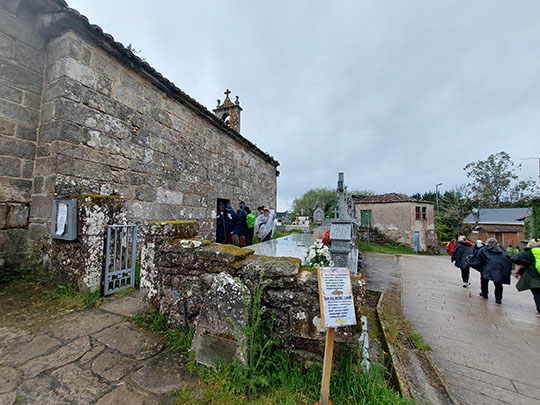
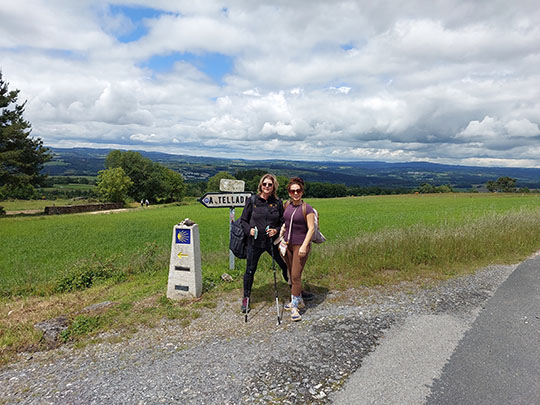
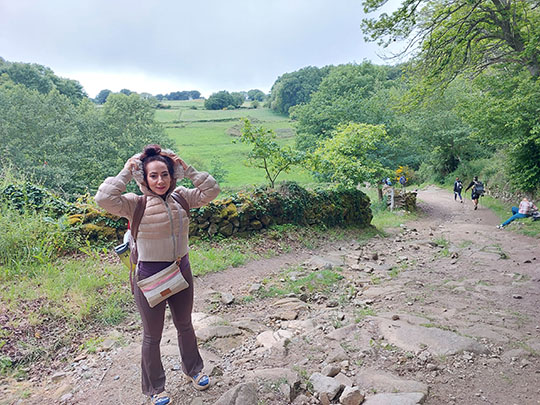
The Camino is marked everywhere with yellow arrows and scallop shell symbols. Frankly, even if all the signs disappeared overnight, it would still be difficult to get lost. There were pilgrims everywhere, all moving in roughly the same direction.
We walked in mid-May, which turned out to be an excellent choice. The route was busy but not overcrowded. We had one overcast day, one day of light drizzle, and three warm sunny days. I suspect August is a different experience entirely. The route must be much busier and considerably hotter.
Do You Have to Pre-Book Accommodation on the Camino?
If you are walking only a short section of the Camino—say 5 to 10 days—then I would definitely recommend booking your accommodation in advance.
We booked all our accommodation through Booking.com. Our trip was in May, which is not even considered peak season, and we booked in February. Even then, it was already difficult to find available places along the route.
Ideally, you want accommodation as close to the Camino as possible, so you don't have to add extra kilometers to your day. In our case, we couldn't find conveniently located accommodation twice. One evening we had to take a taxi, and on another day we had to walk an extra 2 kilometers after already completing the day's stage.
For the busier summer months, I can definitely see the advantage of booking through a local Camino agency or getting advice from people who know the route well.
Our Five-Day Route
The route is traditionally divided into five walking days, each with its own character, scenery, and level of foot-related suffering.
You can see the route on our Google Map here.
We did the Camino independently, but if you'd prefer someone else to handle the accommodation bookings and luggage transfers, there are also organized and self-guided Camino packages available.
Day 1: Sarria to Portomarín (22 km)
The first day felt exciting. Everyone's feet were still optimistic, our backpacks were light, and the adventure had officially begun.
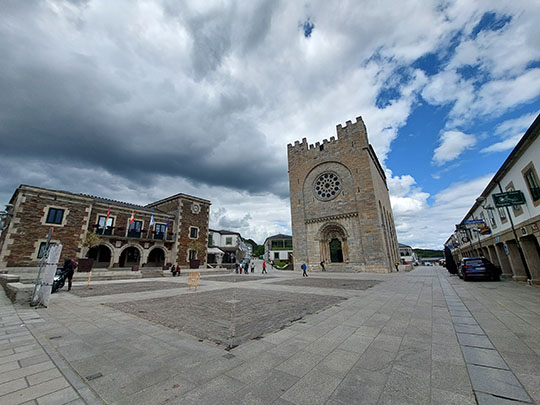
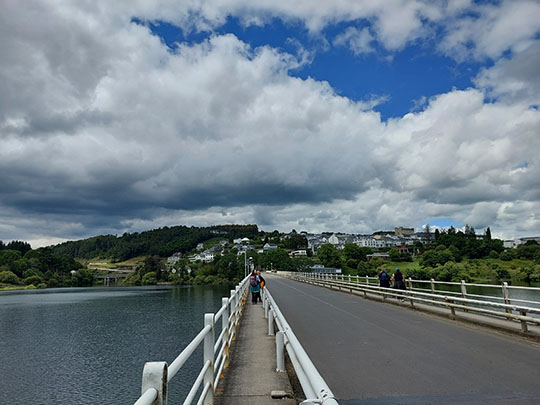
The route passes through forests, small villages, and peaceful countryside before reaching Portomarín, a charming town on the banks of the River Miño. Crossing the bridge into town felt like a proper arrival. There were cafés, restaurants, and plenty of fellow pilgrims celebrating their first completed stage.
Day 2: Portomarín to Palas de Rei (24.5 km)
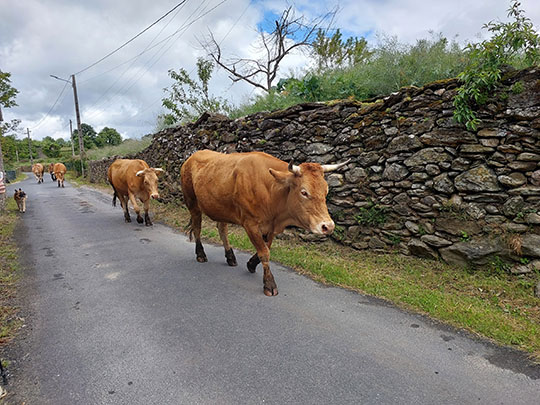
This stage took us through rolling countryside, woodlands, and small farming communities. A light drizzle kept the temperature comfortable and made Galicia look even greener.
Day 3: Palas de Rei to Arzúa (28.5 km)
This was our longest day and, not surprisingly, the day our feet began negotiating new terms and conditions.
We passed through Melide, famous for its restaurants and Galician food. There were several tempting places to stop for lunch, but we were afraid that if we sat down for too long we might never stand up again.
By the end of the day, reaching Arzúa felt like a genuine achievement.
Day 4: Arzúa to O Pedrouzo (19.5 km)
A shorter and gentler stage through eucalyptus forests, quiet country roads, and small villages.
The smell of eucalyptus accompanied us for much of the day. It was beautiful walking, although by this point the scenery was competing with a constant awareness that we had already walked a great many kilometers and still had one day to go.
This was also the day I treated myself to a massage in O Pedrouzo. One of the best decisions of the entire trip.
Day 5: O Pedrouzo to Santiago de Compostela (20 km)
The final stretch.
There is a noticeable change in atmosphere on the last day. Everyone knows they are getting close.
Some pilgrims make a detour to Monte do Gozo, the "Mount of Joy," where pilgrims traditionally catch their first glimpse of Santiago Cathedral. We decided our feet had already demonstrated enough enthusiasm and skipped the extra climb. A local guide also informed us that these days the cathedral is mostly hidden behind trees anyway.
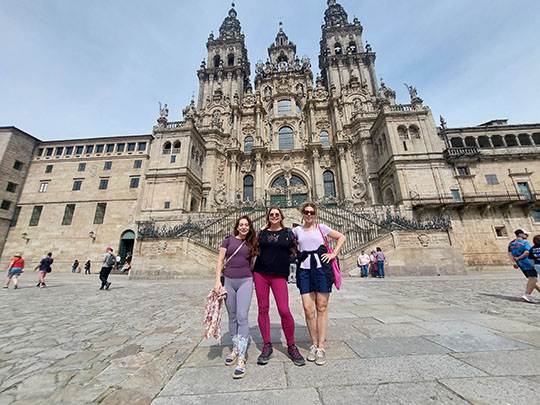
Arriving at the cathedral was surprisingly emotional. We had walked only 115 kilometers, a tiny fraction of the journeys made by some pilgrims, but it still felt like a real accomplishment.
Food, Coffee, and Breakfast Eggs
We never went hungry.
Every morning began with a proper breakfast, usually involving eggs, for energy.
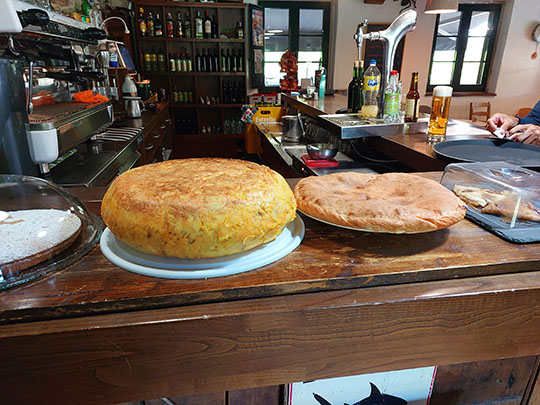
Along the route there are countless cafés, bars, and restaurants, although some villages offer more choice than others. We ate traditional Spanish food including tortilla de patatas, empanadas, and churros.
One evening we bought food from a supermarket and reheated it. Our legs hurt too much to think about cooking.
The official advice says that many of the public taps along the Camino provide safe drinking water. I decided to trust the Spanish authorities and drank from them regularly without any problems.
The People You Meet
Everyone smiles and greets each other with "Buen Camino."
If you stop to rest and lift your feet onto a bench, someone will almost certainly ask if you are okay. It doesn't matter where they come from or whether you have spoken before. Looking after fellow pilgrims seems to be part of the unwritten rules of the Camino.
We met pilgrims from Spain, Italy, England, Scotland, the United States, Belgium, Finland, France, Taiwan, Indonesia, Nepal, and many other countries.
The Camino brings together people from all over the world who would probably never meet otherwise, yet for a few days they share the same path, the same cafés, and often the same foot problems.
One of the most inspiring people we met was an 81-year-old man from New Mexico who was walking despite having pancreatic cancer.
Another pilgrim, also in his eighties, had walked all the way from Brussels, Belgium.
Meeting people like that is both inspiring and slightly inconvenient. It becomes much harder to complain about your own aches and pains.
By the end of the Camino, I realized that while the scenery is beautiful, it is often the people you remember most.
Everybody Hurts
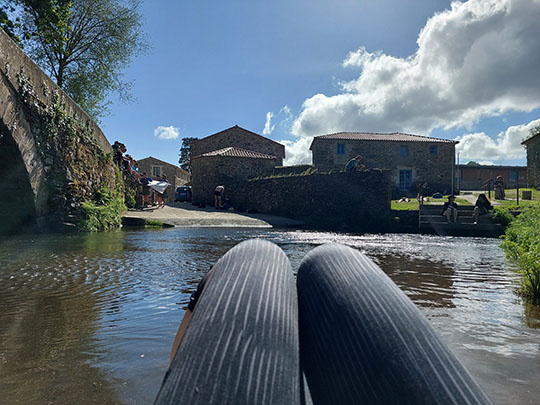
I had good walking shoes. Others wore hiking boots, sandals, or trainers. Some pilgrims used two walking sticks, some used one, and some carried none at all.
Everybody's feet still hurt.
After all, when you walk more than 100 kilometers in a few days, feet tend to protest.
One of the amusing sights along the Camino is what happens when pilgrims stop for lunch. Shoes come off immediately. People inspect their feet with the seriousness of medical specialists. Blisters are compared. Bandages are evaluated. Strangers discuss footwear brands and the merits of Vaseline versus talcum powder.
By day three, feet become a perfectly acceptable topic of conversation with complete strangers.
The good news is that everyone is in the same situation.
I also discovered that a walking stick was far more useful than I expected. Before the trip, I was convinced I didn't need one. By lunchtime on the first day, I had changed my mind and become a passionate supporter of walking sticks. By the evening, I could feel that my arms had officially joined my legs in the Camino experience.
Final Thoughts
For me, the biggest challenge was simply walking so much. By the end of each day, my world had become very small. I wasn't thinking about work, emails, bills, or the news. I was thinking about my feet.
Perhaps that is part of the Camino's secret. When you spend hours walking through forests, villages, and fields, worrying about nothing more complicated than the next hill or the next cup of coffee, life becomes surprisingly simple.
I still don't know if I found the reason I started the Camino. But I know I was glad I walked it.